
- Home
- Pool resurfacing options
Guide 01 / Interior finishes
Same pool, new skin.
Pool Resurfacing Options Compared
Plaster, quartz, pebble, fiberglass gelcoat and vinyl liners solve the same problem in different ways. Here is how they differ, which ones fit your pool, and what the resurfacing job involves from drain to start-up.
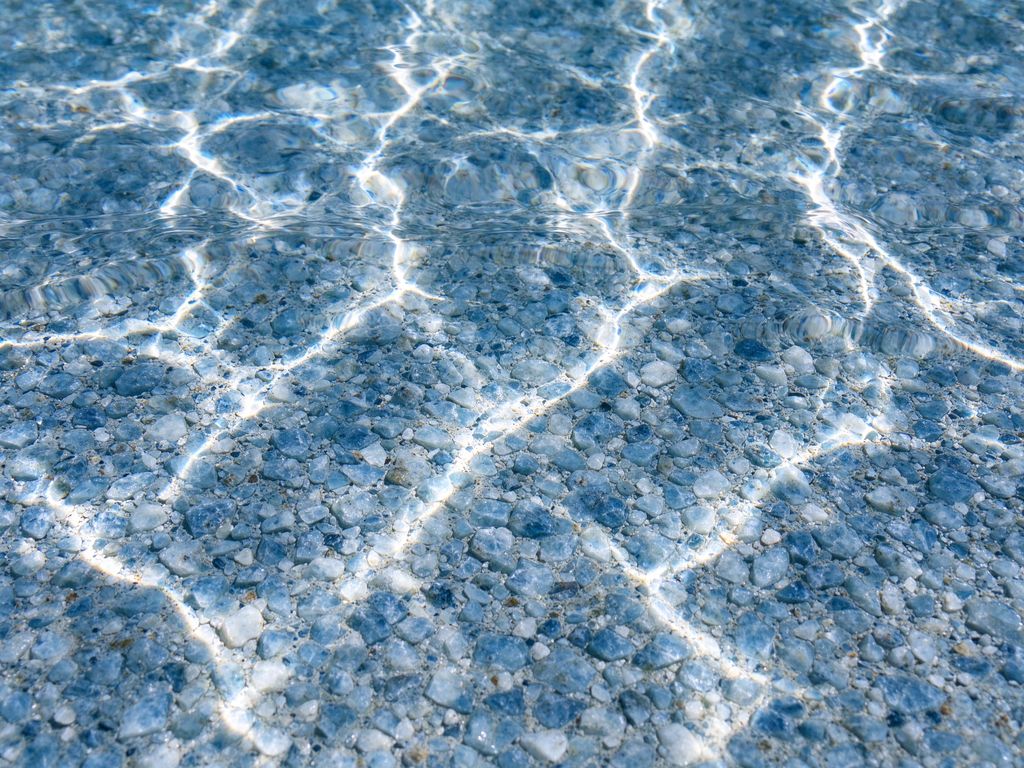
Resurfacing replaces the waterproof, decorative layer on the inside of a pool. It does not fix a cracked shell, a leaking pipe or bad water chemistry, and that is exactly why the order of work matters.
On a concrete pool the interior finish is a cement-based coat a fraction of an inch thick, troweled over the structural shell. On a fiberglass pool it is the gelcoat on the molded shell. On a vinyl pool it is the liner itself. All three wear out eventually, and the way they fail tells you a lot about what to fix before you pick a new color.
Signs a Pool Needs Resurfacing
Age alone is a poor guide. Two pools built the same year can wear very differently depending on water balance, sun, use and how the finish was cured. Look for these instead:
- Rough texture. Etched plaster feels like sandpaper on feet and snags swimsuits. It usually comes from water that spent long periods low in pH, alkalinity or calcium.
- Hollow spots and delamination. Tap the floor and walls with a rubber mallet or the end of a pole. A dull, hollow sound means the finish has let go of the shell, and it will flake off in sheets.
- Stains that do not lift. Metal stains, mottling and grey streaks that survive balanced water and spot treatment are often in the finish itself.
- Exposed shell or aggregate. Dark patches on steps and benches, or pebbles that pop loose, mean the wearing layer is gone in those areas.
- Liner trouble. In a vinyl pool, brittle or faded material, wrinkles that will not settle and repeated tears are the signal. Small holes can be patched; a liner that has lost its stretch cannot.
- Gelcoat blisters or chalking. Fiberglass pools can develop blisters, fading and chalky residue. Some of this is cosmetic; blisters that keep spreading deserve a closer look.
Run a bucket test and look hard at cracks. A pool that loses water, or a crack that opens and closes with the seasons, will damage a brand-new finish. The pool leak detection guide covers the test in detail.
Pool Resurfacing Options Side by Side
The first filter is not taste, it is construction. Pick your pool type to see which options actually apply.
Showing every option.
| Option | Fits | Feel | What owners like | Watch for |
|---|---|---|---|---|
| White plaster | Concrete | Smooth | Bright water color, lowest entry cost of the cement finishes | Shows etching and stains sooner; very sensitive to start-up and water balance |
| Quartz aggregate | Concrete | Fine grain | Color options, hides minor blemishes, longer wear than plain plaster | Color can look uneven if troweled or cured poorly |
| Pebble aggregate | Concrete | Textured | Usually the longest-wearing cement finish; natural look | Rougher underfoot; higher cost; polished or small-pebble versions are gentler |
| Fiberglass refinish or coating | Fiberglass shells; some concrete | Glossy | Smooth, non-porous surface that resists algae | Needs a specialist; adhesion and prep decide everything |
| Vinyl liner replacement | Vinyl-liner pools | Soft | Fast job, wide choice of patterns | Sharp objects and pets; measurements must be exact |
Cost is left out on purpose. Prices swing widely by region, pool size, access, how much old finish must come off and how much tile work is bundled in. Get at least two itemized quotes for the same scope, and use the contractor checklist to compare them line by line.
Plaster: the baseline
Traditional white plaster (often called marcite) is Portland cement and white marble dust, hand troweled. It produces the classic light-blue water and the smoothest surface of the cement family. It is also the least forgiving: aggressive water etches it, and poor start-up leaves it mottled. If you choose plaster, choose it with a plan to test water weekly. The pool water chemistry guide explains the five readings that protect it.
Quartz: plaster with a backbone
Quartz finishes blend crushed quartz into the cement mix. Quartz is harder than marble dust, so the surface tends to hold up better, and the colored grains give designers more water tones to work with. Ask to see a cured sample under water, not a dry chip, because color shifts once it is submerged.
Pebble: the long-wearing texture
Exposed aggregate finishes set small stones in a cement matrix, then wash or acid-expose the top so the stones show. The result is durable and hides dirt, but it has the most texture. Many owners split the difference with mini or polished pebble finishes on steps and benches where people sit.
Fiberglass: refinish, do not replaster
A fiberglass pool is renewed by repairing cracks or blisters and refinishing the gelcoat or applying a compatible coating. It is specialist work: the old surface must be cleaned, sanded and prepared so the new coat bonds. Ask what product will be used, whether it is compatible with your shell and what the maker requires for curing.
Vinyl: a new liner, done right
Liner replacement is mostly about what happens before the liner goes in. A good installer measures the pool carefully, repairs the floor base and wall panels, replaces worn gaskets on skimmers, returns and lights, and checks the liner track (the coping bead receiver). Thicker liners resist punctures better, and patterns hide dirt; the installer should explain the options for your pool. Fill instructions matter too, because the liner is set by water weight and a vacuum on the wall while it fills.
Concrete pools
The Resurfacing Job, Step by Step
Seven stages most cement-finish jobs move through. Use them to ask better questions before the crew shows up.
- 01
Inspection and scope
Cracks, hollow spots, tile, coping and fittings are checked. The written scope should say what will be removed, repaired and replaced, including fittings like return eyeballs and drain covers.
- 02
Controlled drain
The contractor drains the pool, often opening the hydrostatic relief valve so groundwater cannot push up on an empty shell. Weather and water table can change the timing.
- 03
Removal or surface prep
Loose and hollow finish is chipped out. Sound finish may be roughened, acid washed or treated with a bond coat so the new material grips.
- 04
Repairs and tile
Cracks are repaired, fittings are set at the right depth and any waterline tile work is done before the finish goes on, so the new coat can be finished up to it.
- 05
Application day
The finish is mixed and applied floor to waterline in one continuous push, then troweled or exposed depending on the product.
- 06
Uninterrupted fill
Filling starts promptly and should not stop until the water reaches the middle of the skimmer, because a pause leaves a visible ring.
- 07
Start-up
Chemicals are added on a schedule set by the finish maker or contractor, the surface is brushed often, and heaters, salt cells and automatic cleaners usually wait until start-up is complete.
Why Start-Up Decides How a New Finish Wears
Fresh cement finishes release calcium and raise pH as they cure. The first weeks of brushing and chemistry remove plaster dust and keep that calcium from settling as scale or causing streaks. There are different accepted start-up methods, and finish makers publish their own. The contractor should name the method, tell you who performs it and for how long, and put it in writing.
- If the contractor handles start-up
- Ask for the visit schedule and a log of readings.
- If you handle start-up
- Get written instructions from the contractor or finish maker before fill day.
- If you plan to switch to salt
- Ask how long to wait before adding salt and turning on the cell.
- If you have a heater
- Ask when it is safe to heat, since warm water speeds curing chemistry.
Most complaints about new plaster (spotting, streaks, early roughness) trace back to the first month, not the bag of material. Put responsibility for start-up in the contract, with names and dates.
Pool Resurfacing Questions
How do I know my pool needs resurfacing and not just a good cleaning?
Brush a rough patch and wipe it with your hand. If the roughness, staining or chalky residue is still there after the water has been balanced for a few weeks and the walls have been brushed clean, the finish itself is worn. Delamination (hollow-sounding spots when tapped), exposed structural shell and cracks that weep are clear signs the surface needs replacing.
Can a new finish go over the old one?
Sometimes. A sound, well-bonded old finish can be prepared and refinished over, while loose or hollow sections must be removed. Ask the contractor how they will test for bond and what they will remove before applying anything new.
Do I need to drain the pool myself before the crew arrives?
Usually not. Draining a concrete pool carries a real risk if groundwater is high, so most contractors want to control the drain themselves and check the hydrostatic relief valve. Ask in writing who drains the pool and who is responsible if the shell moves.
Is quartz or pebble always better than plaster?
Not always. Aggregate finishes tend to wear longer and hide blemishes better, but they cost more and feel more textured. White plaster gives the brightest water color and the smoothest feel. The best choice depends on budget, how the pool is used and how carefully the water will be kept balanced.
Keep reading
Related Pool Guides

Ready to Compare Resurfacing Quotes?
Describe your pool type, the finish you have now and what you are seeing. A short service request is enough to get the conversation started.
Send a service request