
- Home
- Pool tile and coping
Guide 02 / The edge of the pool
Where the water meets the yard.
Pool Tile and Coping Replacement Guide
Waterline tile and coping take more abuse than any other part of the pool: sun, splash, chemistry, freezing and people sitting on the edge. Here is how the materials differ and why the joints behind them matter as much as what you see.
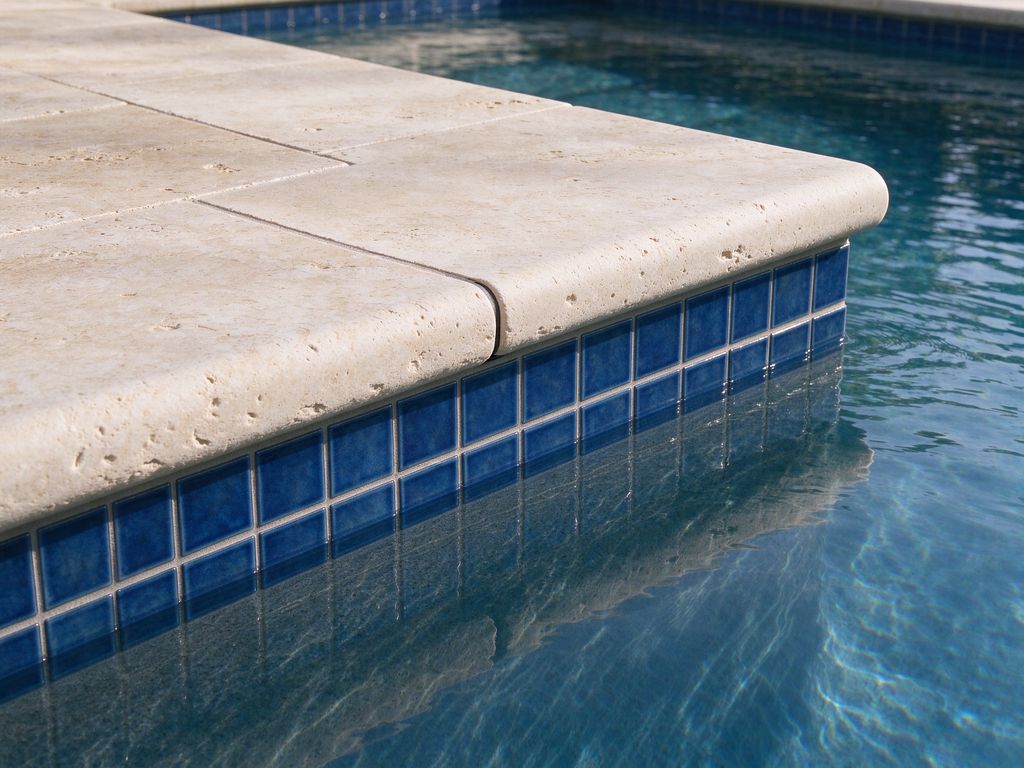
The tile band protects the most exposed strip of the pool, the waterline, and the coping caps the top of the wall. Get either one wrong and water finds its way into the structure.
What Pool Tile and Coping Actually Do
On a concrete pool the top of the wall is a thick, reinforced ring called the bond beam. The waterline tile is set on the inside face of that beam, and the coping sits on top of it. Tile gives you a surface that is easy to scrub at the line where oils, sunscreen and scale collect. Coping gives a finished edge to grab and sit on, sheds water away from the pool and covers the joint between the pool and the deck.
Vinyl and fiberglass pools have their own versions: vinyl pools often use a printed tile band on the liner and an aluminum or composite coping track that holds the liner bead, while fiberglass pools commonly have a cantilevered concrete or paver coping over the shell lip. The same idea applies to all of them. The edge has to stay sealed and stable while the ground and the deck move.
Pool Tile and Coping Materials
Hover or tap each sheet number below to compare the four families you will be offered most often.
Sheet 02 / Edge materials
Four Families, Four Trade-Offs
Two tile choices for the waterline and two coping choices for the cap. Each panel lists what owners like and what to ask about.
Tile / A
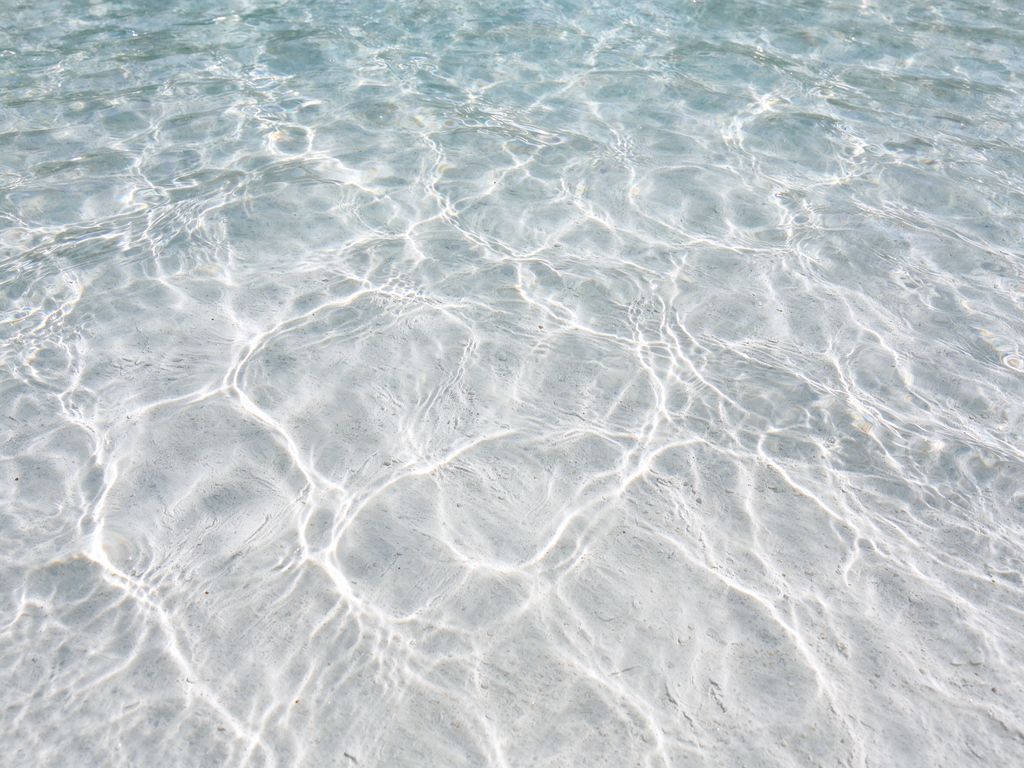
Glass tile
Deep color and shimmer, and it does not absorb water. It needs a setting material and installer experienced with glass, because thin glass shows every flaw in the bed and can crack if the substrate moves.
Tile / B
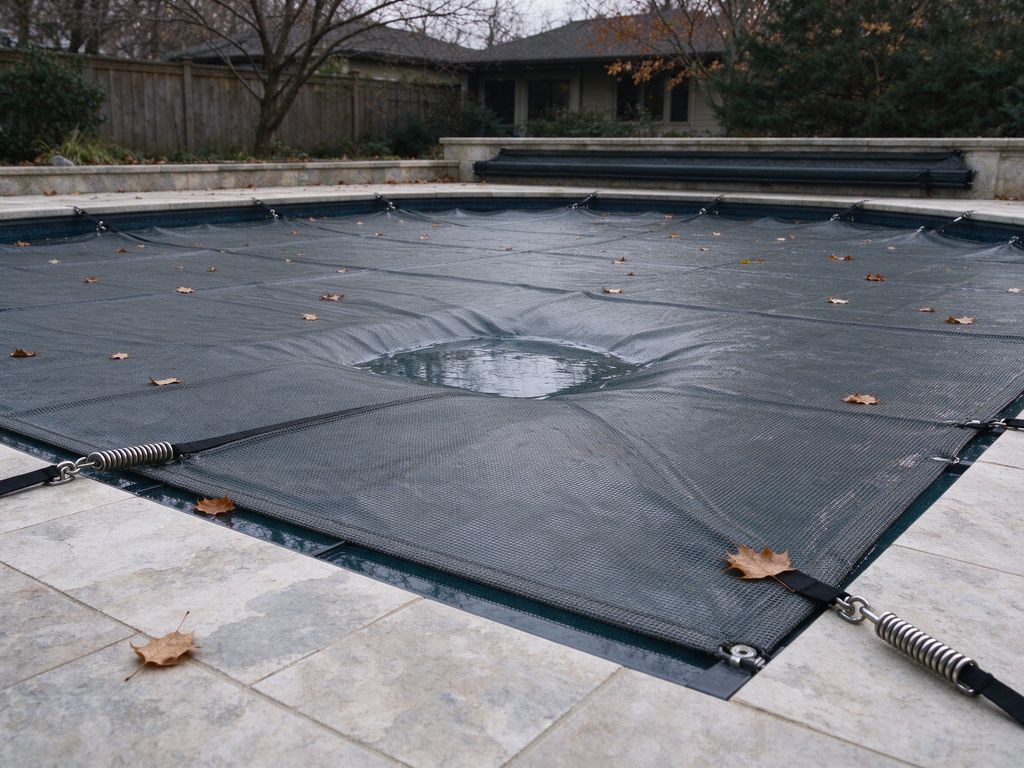
Porcelain and ceramic tile
The workhorse waterline tile: wide range of colors and sizes, forgiving to install and easy to match. Ask for tile rated for submerged and freeze-thaw use if your winters freeze.
Coping / C
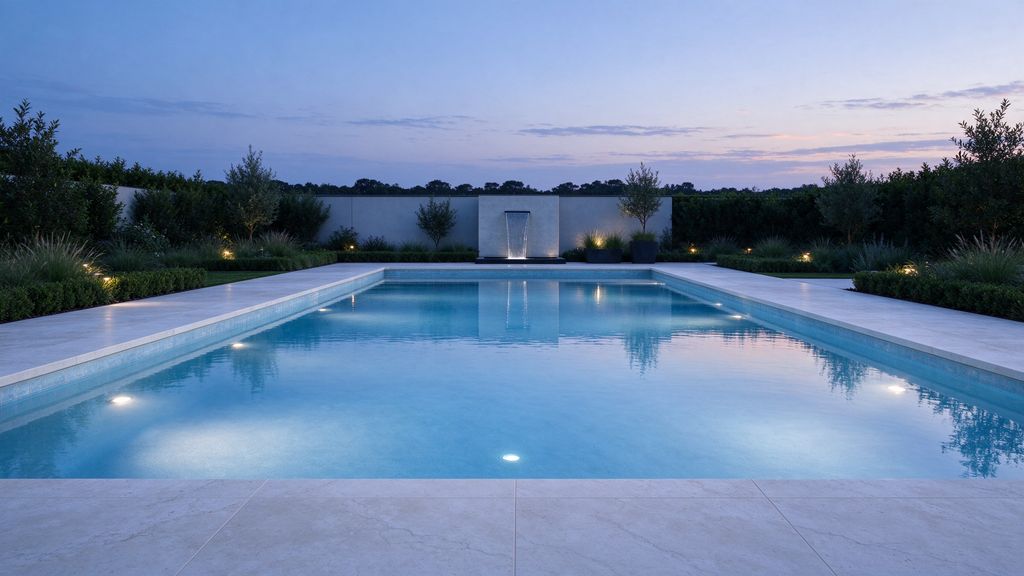
Natural stone coping
Travertine, limestone, flagstone and similar stones stay comfortable underfoot and look built-in. They vary in density and absorption; sealing, edge profile and salt compatibility all need a straight answer from the supplier.
Coping / D
Concrete and paver coping
Precast concrete units, pavers or poured-in-place cantilevered concrete. Consistent, durable and adaptable to curves. Poured coping needs careful control joints so cracks form where you want them.
Common Tile and Coping Failures, and What Causes Them
Most edge problems are not the tile's fault. They are symptoms of water, movement or chemistry, and replacing the tile without fixing the cause just resets the clock.
Scale and white crust at the waterline
Calcium carbonate scale forms where water evaporates and leaves its minerals behind, and it grows faster when pH and calcium run high. Efflorescence is different: it is mineral salt carried out of the masonry by water moving through it, often from behind the tile. Scale points to water balance. Efflorescence points to a water path, such as a failed deck joint or cracked coping letting rain into the beam.
Loose, hollow or popped tile
Tile lets go when the bond beneath it fails. Freeze-thaw cycles, water trapped behind the tile, the wrong setting material, and a deck pushing on the coping are the usual suspects. Tap the tile band; hollow tiles sound dull, and they will fall off eventually.
Cracked coping and a cracked bond beam
When a concrete deck expands in summer heat and the joint between deck and coping is packed with rigid mortar, the deck shoves the coping inward. The tell is a horizontal crack in the tile line and coping stones that rock or have shifted. The fix starts with restoring a flexible joint, not with new tile.
The gap between the coping and the deck should be filled with a flexible, UV-stable sealant over a backer rod, not grout. It is inexpensive to maintain and protects the most expensive part of the edge. Ask any contractor quoting a retile what they will do with it.
Grout loss and stained grout
Grout washes out over time, especially in water that is low in pH, alkalinity or calcium. Missing grout lets water behind the tile. A regrout or a full retile is usually decided by how many tiles are loose.
How a Retile and Recoping Job Usually Runs
- Lower the water below the work area, or drain fully when combined with resurfacing.
- Remove old tile and coping, then clean the bond beam to sound material.
- Repair the beam: patch spalls, address cracks, replace damaged rebar cover where needed.
- Set new tile with a setting material suited to submerged use and the tile type, then grout.
- Set coping on a mortar bed with the correct overhang and slope away from the pool.
- Seal the joint between coping and deck with flexible sealant, and seal stone if the supplier recommends it.
If you are also resurfacing, the tile goes first and the new finish is brought up to it. That sequencing belongs in the written scope; the pool resurfacing guide lays out the whole job.
Questions Worth Asking Before You Pick Tile
- Is this tile rated for submerged use, and for freeze-thaw if winters here freeze?
- What setting material and grout will you use with this tile, and why?
- How will you treat the coping-to-deck joint?
- If the pool uses salt, is this stone or metal trim compatible with it?
- Who handles any permits if the deck or electrical bonding is disturbed?
Electrical bonding deserves a note. Metal within and around a pool is tied together by a bonding grid for electrical safety, and deck or coping work can disturb it. That is licensed electrical territory and a matter of local code, so make sure the contractor addresses it rather than assuming.
Pool Tile and Coping Questions
Should I replace waterline tile when I resurface?
Often it makes sense. The pool is already drained, the crew is already there, and new finish is troweled up to the tile line. If the existing tile is sound and you like it, it can stay; if it is loose, cracked or heavily scaled, replacing it during the same project avoids cutting into a brand-new finish later.
What is the white crust on my pool tile?
Usually calcium scale or efflorescence. Scale forms when water with high pH and calcium evaporates at the waterline. Efflorescence is mineral salt pushed out from behind the tile by water moving through the masonry. Light scale can be removed with a pumice stone or a tile cleaner; heavy deposits are commonly removed by media blasting. Fix the water balance or the water path, or it returns.
Can I use any stone for coping?
Stone must be rated for exterior, wet, freeze-thaw use where you live, and it needs the right edge profile and sealing. Some softer stones react with salt water or acids. Ask your supplier whether the stone is suitable for pool coping and salt pools specifically.
What is the joint between the coping and the deck for?
It lets the deck and the pool move separately. When that joint is filled with hard grout or mortar instead of a flexible sealant, the deck can push on the coping and crack the tile and bond beam beneath it.
Keep reading
Related Pool Guides

Edge Cracked or Tile Falling Off?
Tell us what the tile line and coping look like and whether the pool loses water. A few sentences and a description of any cracks is plenty.
Request tile and coping help