
- Home
- Pool water chemistry
Guide 05 / Water and seasons
Balanced water protects every surface.
Pool Water Chemistry Basics and Seasonal Care
Water chemistry is what keeps swimmers healthy and finishes intact. Five readings do most of the work. Learn what they mean, check your own numbers, then follow the pool through its year from opening to closing.
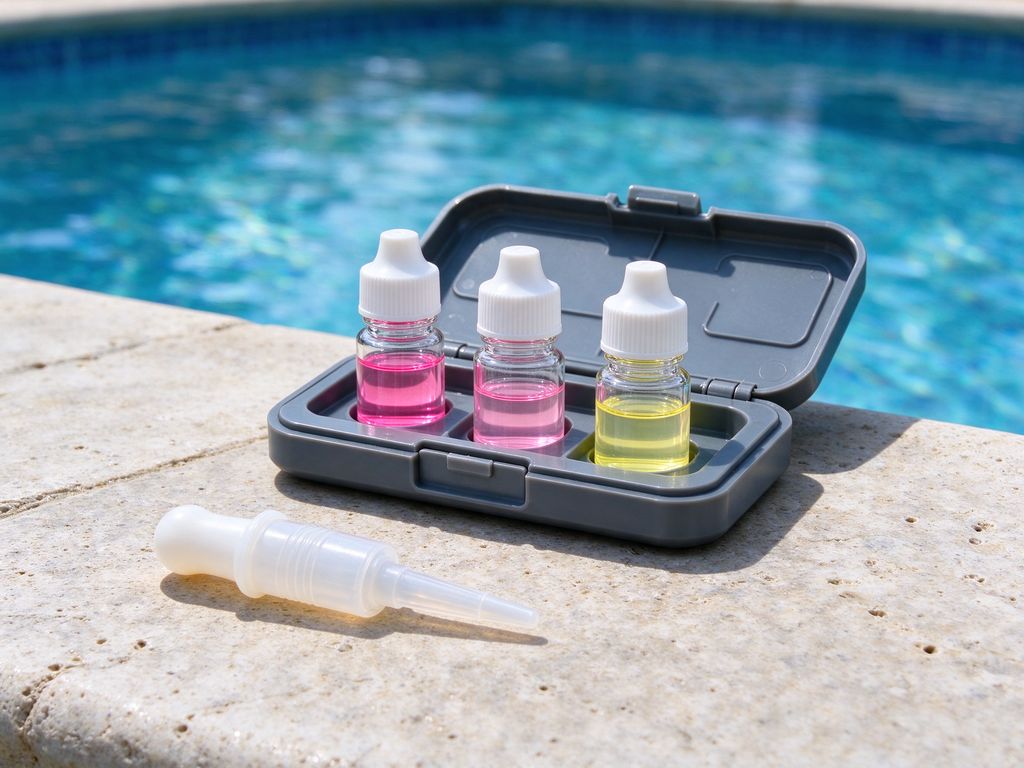
Clear water is not the same as balanced water. A pool can sparkle while slowly etching its plaster or scaling its heater, and that slow damage is what eventually forces a resurface.
The Five Readings That Matter
Think of them in two groups. Free chlorine and pH change daily and keep the water safe. Alkalinity, calcium hardness and cyanuric acid change slowly and keep the water from attacking or coating the pool.
Free chlorine: the sanitizer
Free chlorine is the chlorine still available to kill germs. The U.S. Centers for Disease Control and Prevention recommends at least 1 ppm in pools, with pH between 7.2 and 7.8. Outdoor pools that use stabilizer need more free chlorine to do the same job, because stabilizer holds some of it in reserve.
pH: how acidic the water is
Low pH corrodes metal, etches plaster and stings eyes. High pH makes chlorine sluggish and encourages cloudy water and scale. Most balancing work is really pH work.
Total alkalinity: the buffer
Alkalinity resists pH swings. Too low and pH bounces around; too high and pH keeps creeping up. Fix alkalinity first, then pH.
Calcium hardness: what plaster wants
Water low in calcium will pull it from plaster and grout. Water high in calcium, especially with high pH and warm temperatures, deposits scale on tile, in heaters and inside salt cells.
Cyanuric acid: sun protection for chlorine
Stabilizer shields chlorine from sunlight in outdoor pools. It accumulates, especially when stabilized chlorine tablets are used, and the usual way to lower it is draining and refilling part of the water.
Pool water checker
Enter readings from your test kit. Ranges are commonly cited residential targets; your test kit maker, finish maker and local health code may differ.
Guidance only, not a substitute for product labels. Vinyl and fiberglass pools often run lower calcium targets than plaster; salt pools follow the cell maker's ranges.
Pool Chemical Safety
Pool chemicals are concentrated and some react violently with each other. A few habits prevent most accidents:
- Never mix chemicals, and never put different products in the same scoop or bucket. Some chlorine products and acids release toxic gas when combined.
- Add chemical to water, not water to chemical, and follow the label for pre-dissolving.
- Store separately, cool, dry, ventilated and locked, with acids kept apart from chlorine, and out of reach of children and pets.
- Protect yourself with eye protection and gloves as the label directs, and add chemicals with the pump running so they disperse.
- Wait before swimming as the product label says, especially after shocking.
For a chemical exposure or swallowing, call Poison Help at 1-800-222-1222 (U.S.). For trouble breathing or a fire, call 911.
The pool year
Opening, Swimming, Closing
Seasons vary by climate, so these stages follow water temperature and freeze risk rather than calendar dates. In warm regions the middle stages simply stretch across the year.
- 01
Open
Clear the cover, restore water level, reinstall plugs and fittings, start the pump and check for leaks.
- 02
Balance
Test all five readings, adjust alkalinity first, then pH, then chlorine. Brush and vacuum.
- 03
Swim season
Frequent chlorine and pH tests, clean baskets, watch filter pressure, keep the gate latched.
- 04
Wind down
Leaves arrive. Shorten pump schedules as water cools, clean the filter and rebalance.
- 05
Close
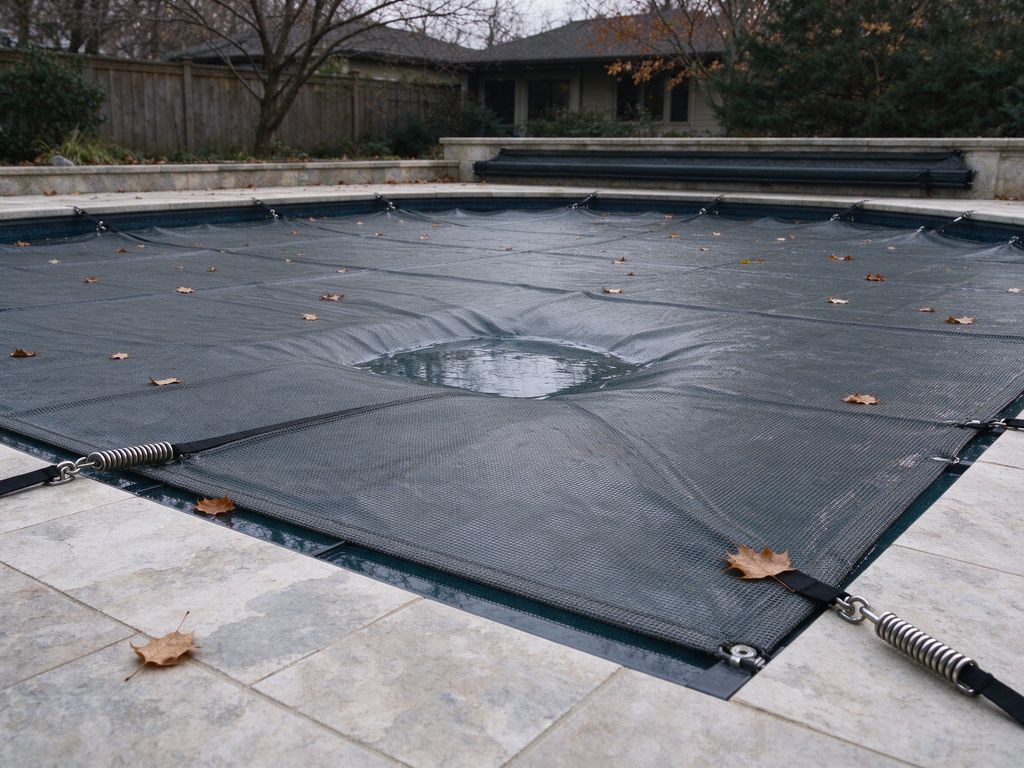
Where it freezes: lower water, clear lines, protect equipment, fit a safety cover.
Opening a Pool for the Season
- Clean and remove the cover without dumping debris into the pool, then let it dry before storing.
- Reconnect the equipment: reinstall drain plugs, gauges and baskets, remove winter plugs from return and skimmer lines, and open valves.
- Raise the water to the middle of the skimmer opening.
- Prime and start the pump, then walk the pad and the plumbing looking for drips, and watch the filter pressure.
- Test and balance all five readings, then shock if the water is green or cloudy.
- Brush, vacuum and run the filter until the water clears, and check the safety items: gate latch, alarms and drain covers.
Closing a Pool Where Winters Freeze
Freezing water expands with enough force to crack pipes, pumps, filters and heaters. Closing is about getting water out of anything that can trap it.
- Balance and clean the water a few days before closing, and add a winterizing product only if the label fits your pool.
- Lower the water to the level your cover and skimmer type require. Some safety covers call for little or no lowering, so follow the cover maker's directions.
- Clear the lines by blowing air through returns and suction lines, then plug them. Pool antifreeze made for plumbing lines is sometimes added as backup; never use automotive antifreeze.
- Drain the equipment: open drain plugs on the pump, filter, heater and chlorinator, and store small parts indoors.
- Cover the pool. A safety cover meeting ASTM F1346 is designed to support weight and keep children and pets out; a basic winter tarp is not a safety device.
Mild-climate pools
Many pools in warm regions stay open all year. Pumps run shorter schedules in cool months, chlorine demand drops, and freeze-protection settings on automation (where fitted) run the pump during rare cold snaps. Test less often, but do not stop testing.
Better water also means fewer renovation dollars. Etched plaster, failed grout and scaled tile are covered in the resurfacing and tile and coping guides.
Pool Water Care Questions
How often should I test my pool water?
During the swim season, test free chlorine and pH several times a week, and more often in heat waves, after heavy use or after storms. Test alkalinity, calcium hardness and stabilizer less often, such as every week or two, and whenever you add water or change products.
Why does my pool smell strongly of chlorine?
A sharp chemical smell usually comes from chloramines, which form when chlorine combines with sweat, urine and other waste. It often means the pool needs more free chlorine and better circulation, not less chlorine.
Can I open my pool myself?
Many owners do, especially with a simple equipment pad. Electrical work, gas heaters and any damaged equipment are jobs for licensed professionals. If the pool was closed with antifreeze or plugs, follow the steps in reverse and check every fitting for leaks before you run the pump.
When should I close my pool?
Closing is about water temperature and freeze risk, not a date. In climates that freeze, the goal is to finish before the first hard freeze; algae grows less once water stays cool. In mild climates many pools never close and simply run shorter pump schedules through winter.
Keep reading
Related Pool Guides

Water Never Stays Balanced?
Share your recent test readings, your sanitizer type and how the water looks. Chronic imbalance often points to an equipment or circulation problem.
Request water help